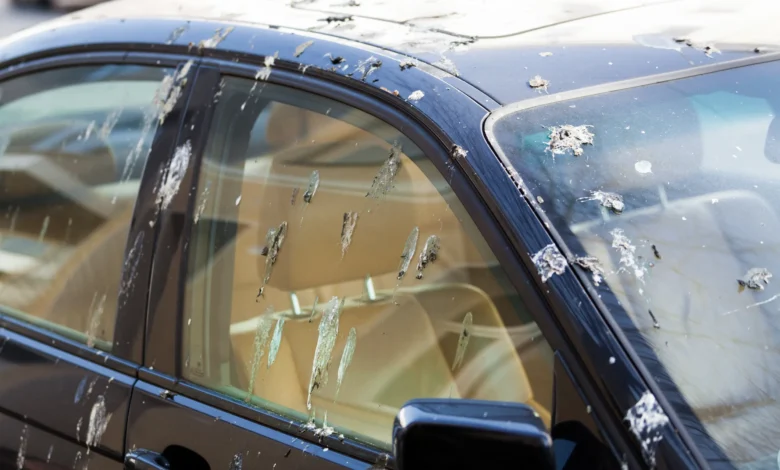
Few things ruin a freshly washed car faster than a wood pigeon with bad timing. Bird droppings look like a cosmetic nuisance, but the chemistry underneath is genuinely aggressive, and the window for harm-free removal is shorter than most drivers think.
Why bird droppings damage paint
Bird waste is a concentrated cocktail. The white solid is uric acid (a strong organic acid), the dark portion is partly digested seeds and grit, and the moisture carries enzymes from the bird’s caecum. On a warm bonnet, that mixture quickly becomes a localised acidic poultice.
According to the RSPB, the average garden pigeon produces droppings several times an hour, and seed-eating species deliver the most acidic output. Park under a fruiting tree in late summer and you’re effectively standing your bonnet under a slow-drip etch bath.
According to the RAC, bird droppings are one of the top five causes of localised paint damage on UK cars, alongside tree sap, fuel spills, road salt and stone chips.
How long before etching sets in
The honest answer is “it depends,” and the variables are temperature, paint hardness, and how acidic the individual dropping is. The table below summarises typical etch progression on modern UK two-pack clear coats.
| Conditions | Time to surface mark | Time to permanent etch |
|---|---|---|
| Cool, overcast, fresh dropping | 24-48 hours | 5-7 days |
| Mild day, average paint | 4-8 hours | 24-48 hours |
| Hot bonnet in direct sun | Under 1 hour | 2-4 hours |
| Ceramic-coated panel | Significantly delayed | Days, often preventable |
Bird droppings are acidic, enzymatic and abrasive — all three vectors work at once. Bird droppings are not a problem you can wait until the weekend to deal with if your car is parked in summer sun.
According to the AA, drivers should carry microfibre cloths and a small bottle of detail spray in the boot specifically for incidents like this. A two-minute roadside intervention saves a £400 panel polish later.
Safe removal, step by step
Speed matters, but technique matters more. Wiping a hardened dropping with a dry cloth is how you trade an etch mark for both an etch mark and a swirl pattern.
- Soak. Drape a microfibre soaked in warm water or quick detailer over the dropping. Leave for 60-90 seconds.
- Lift, don’t drag. Once softened, the dropping should release with a gentle blot.
- Rinse the cloth. Never re-use the soiled face on paint.
- Re-wipe the area with a clean cloth and detail spray.
- Inspect at an angle. If you see a matte halo, the paint has been etched and will need machine polishing.
What not to do
A short list of things that turn small problems into big ones.
According to Auto Express detailing product roundups, the cars showing the worst long-term paint condition often live with otherwise meticulous owners — the culprit is delayed contaminant removal, not infrequent washing.
Long-term protection options
You cannot stop birds. You can stop their lunch becoming your panel’s problem. A ceramic paint protection layer raises the sacrificial barrier between droppings and clear coat, giving you hours of breathing room rather than minutes.
The Which? consumer testing of paint protection products notes that ceramic coatings demonstrably reduce the etch depth from acidic contamination in controlled tests, though they don’t eliminate it entirely. Real-world UK conditions back this up: coated panels survive a forgotten weekend dropping; uncoated black bonnets in July rarely do.
Maintenance washes matter just as much. A weekly two-bucket wash, followed by a topper spray sealant, keeps the coating’s contact angle high and the release behaviour strong.
Two-wheeled finishes need help too
Motorbikes get an even rougher deal. Tank-top droppings sit closer to head height and bake under engine heat. A proper bike care kit bundles the right shampoos, plastic-safe sprays and quick detailers for fairings, tanks and pannier finishes that don’t behave like car paint.
Plastic-heavy bike bodywork shows etch marks faster than steel panels but polishes back more easily. The same soak-and-lift technique applies; just use products rated for sensitive plastics and matte finishes where relevant.
FAQs
Will a wash through a hand car wash remove bird damage? It removes the residue, not the etch. If the dropping has sat long enough to leave a matte mark, machine polishing is the only way to restore gloss.
Are some bird species worse than others? Yes. Seed-eating birds (pigeons, finches) produce more acidic droppings than insectivores. Berry-eating birds in late summer produce some of the most staining output.
Does insurance cover bird damage? Comprehensive policies sometimes consider it under accidental damage, but excess usually exceeds the polish cost. Check your specific policy wording.
Will a ceramic coating mean I can ignore droppings? No. It buys you time. Same-day removal is still the safe rule; coatings just stop a forgotten weekend turning into a respray.
Can I use baby wipes in an emergency? Better than nothing, but they contain mild surfactants and fragrance oils that can leave residue. A clean microfibre soaked in bottled water is preferable.